What changing demographics mean for how we design, build, and think about senior living communities
There's a demographic reality in the United States that’s worth paying attention to. Research from the National Investment Center for Seniors Housing & Care (NIC) projects the 80-plus population in the United States will nearly double by 2035. That population shift is already underway. It's reshaping every conversation we have with developers, operators, and communities planning for what comes next.
At Rheinlander Architects, we've spent decades designing senior living communities — assisted living, memory care, skilled nursing, and everything in between. In recent years, we’ve seen the nature of our clients’ needs noticeably adapt to the changing demographics. While there’s a real sense of urgency to be prepared to meet demand, the senior living industry still faces constraints that are slowing the response.
This article is our attempt to share what we're actually seeing and hearing on the ground, across projects, and in conversations with operators and developers who are navigating all of it.
The Demand is Real, and it's Being Felt
There’s nothing abstract about the demographic data and forecasted needs. The nation’s senior population is growing faster than new senior living communities are being built, and hundreds of thousands of new units are needed. In the past two to three years alone, we've had discussions with our clients on roughly 30 projects that are waiting to move forward. The demand and need is there. But the numbers, as they say, don't pencil.
Construction costs, financing constraints, land costs, and reimbursement structures (particularly in skilled nursing), have created a gap between what's needed and what's economically viable to build. The result is that the industry is stretching to meet demand through additions, renovations, and adaptive reuse rather than ground-up construction. While this helps to increase occupancy rates across existing supply it does little to address the volume of what the market demands to meet the need in the coming years.
“The demand does feel real. We've had 20 to 30 projects approach us that just don't pencil out. As a result, they're sitting dormant. But from a real estate standpoint, you can see there's more interest. People from outside the industry are starting to pay attention."
- Michael Rheinlander, Principal Architect of Rheinlander Architects
Post-COVID, we've seen a meaningful number of assisted living communities that closed during the pandemic being purchased and reopened. In many markets, this solution can be more economically feasible than new construction. However, it comes with its own regulatory complexity, since a facility that has been closed is typically required to satisfy current standards as though it were brand new.
The Wave Hasn't Fully Hit Yet. But it Will
One way to think about where we are right now in senior living demand is that we're in the early part of the wave, not the peak.
The boomer generation is aging into senior living at scale, but many haven't yet reached the point of needing higher levels of care. People are staying healthier and more mobile longer than they were 20 or 30 years ago. In-home health care has expanded the window during which individuals can remain in their own homes or in assisted living settings, which has allowed some to postpone, but not eliminate, their transition to skilled nursing.
The practical implication is that the most intense pressure on skilled nursing capacity is roughly a decade out, by most projections. The wave is coming. And it will fall off on the other side as generations with lower birth rates age through the system.
That long arc is shaping how thoughtful developers and architects are approaching design today. Nobody wants to build for a peak that passes and leaves an oversized facility behind. One of the projects we're currently working on is being designed with structural openness and flexible mechanical, electrical, and plumbing systems specifically so that spaces can be repurposed in the future. Flexibility in these cases is a long-term investment strategy.
Skilled Nursing and Assisted Living are Moving in Different Directions
It's important to note that "senior living" is used broadly to describe more than one type of solution. The assisted living and skilled nursing segments are experiencing meaningfully different conditions right now.
Assisted living, particularly smaller, more residential-style communities, is seeing growing activity. Occupancy is recovering across the country. Developers are interested. And the model itself is evolving, with resident-centered design and smaller household-style communities increasingly being recognized as both philosophically appealing and operationally sound.
Skilled nursing is a more complex picture. Reimbursement rates have not kept pace with construction costs in many states, making new ground-up skilled nursing facilities difficult to justify financially. The not-for-profit operators, who are traditionally associated with building new skilled nursing capacity, are now largely focused on renovations and additions rather than new construction. They're trying to meet shifting market demands and accommodate new design trends and client expectations the best way they can within the constraints they face. We are currently working with a couple of clients who are creatively making new ground-up projects pencil out and moving forward with their investments. They are positioning themselves for optimal returns in the long run by taking action now and not waiting for the ‘perfect moment’ to invest.
The result is that supply in skilled nursing is unlikely to ever fully meet the projected demand. That's not pessimism, it's a realistic view shared widely within the industry. Meeting the gap will require creative solutions and regulatory updates that incentivize new capital to be deployed and perhaps allow for new models of care delivery.
Memory Care is a Growing Priority with Specific Design Challenges
One aspect of the demographic shift that deserves greater attention is the rising prevalence of dementia and related conditions.
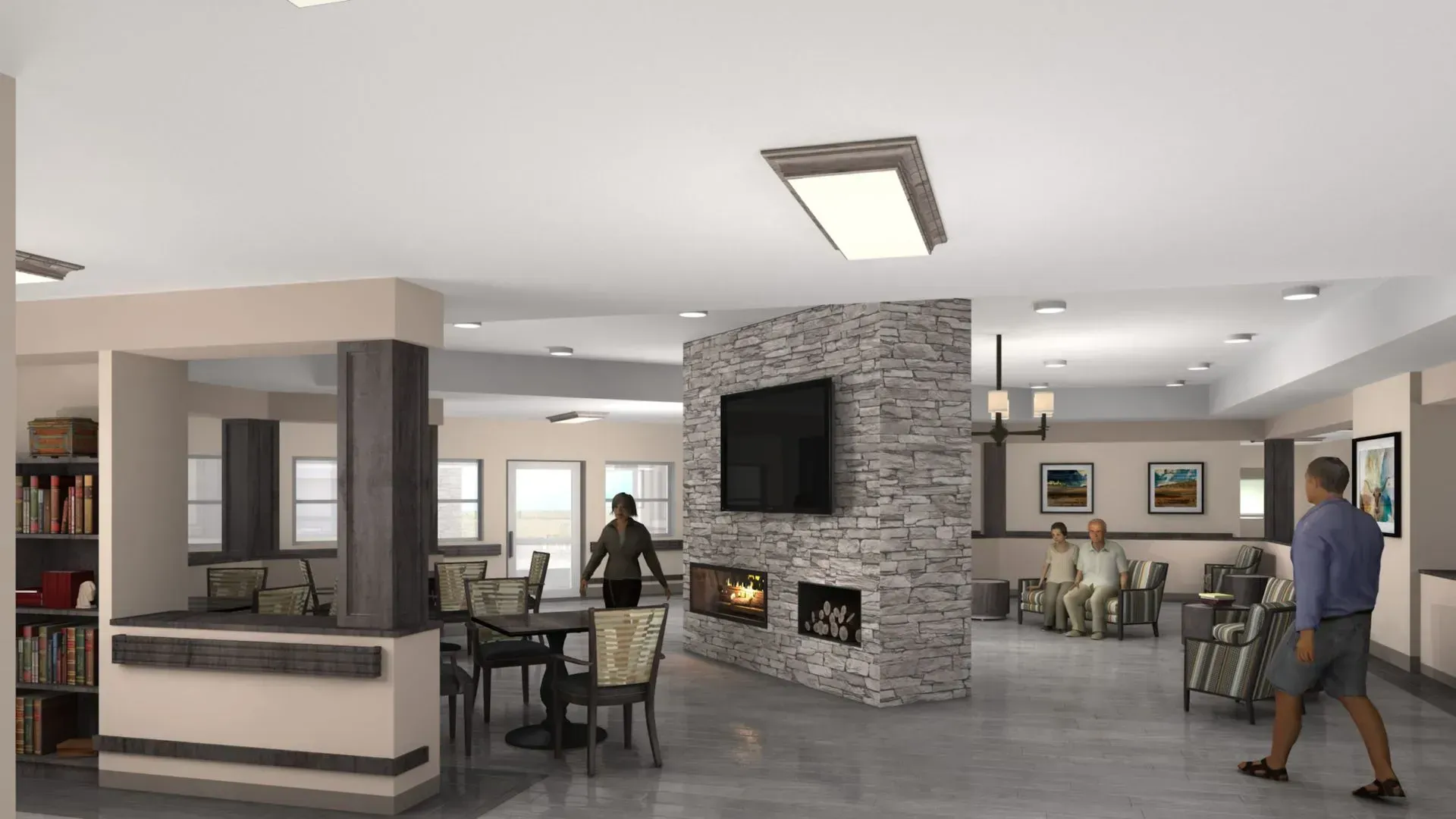
As the senior population grows, so does the number of individuals who will need memory care. This is an area where design philosophy matters enormously. A well-designed memory care community addresses the complexity of creating spaces that genuinely support their dignity, autonomy, and wellbeing. These communities must be secure environments and at the same time feel familiar to the residents. We look to design spaces that support daily independence where possible and allow residents to move through their day with a sense of normalcy rather than confinement.
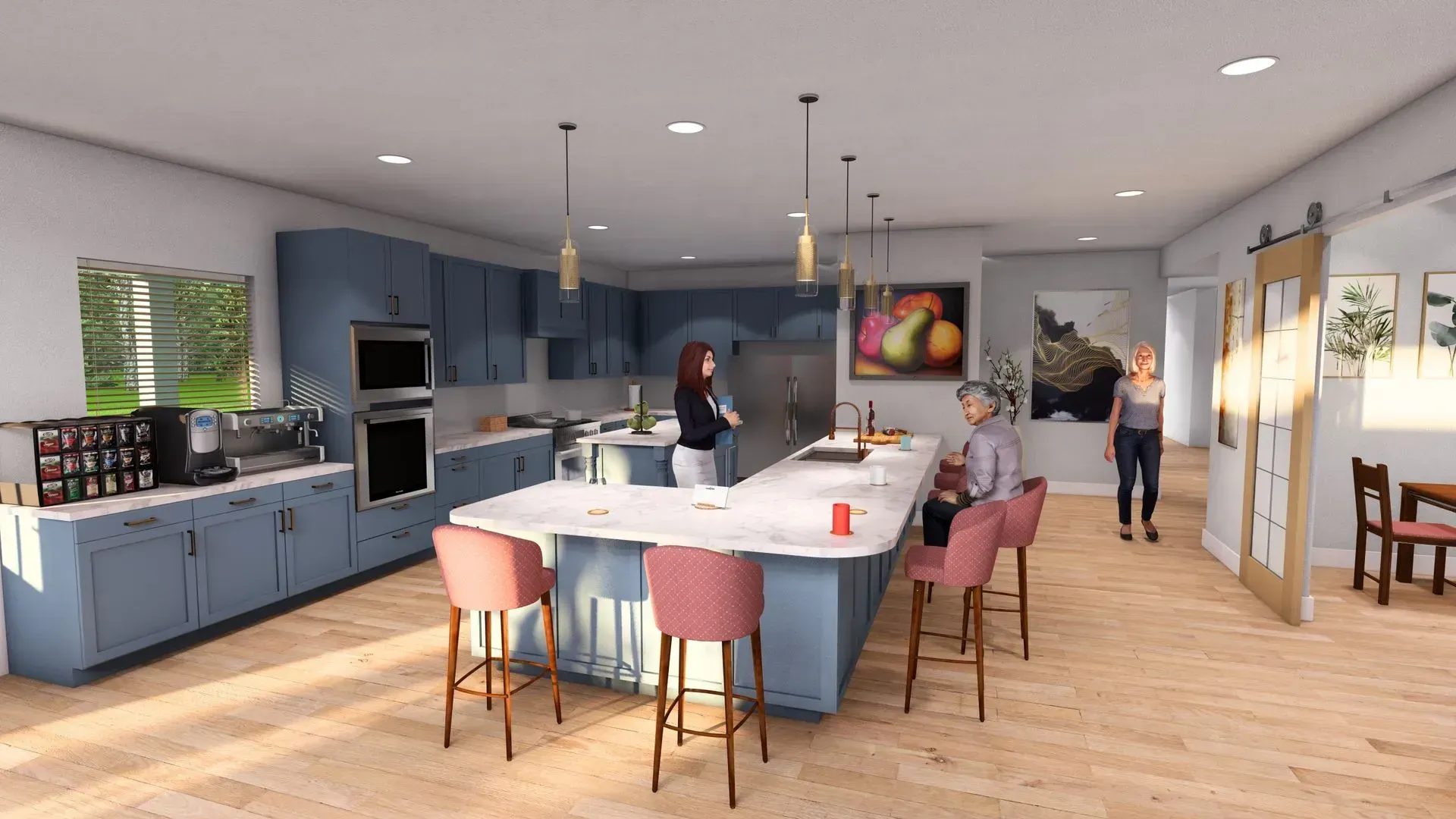
We're seeing real momentum in the small-house memory care model. The intent is to have communities of 8 to 12 residents built around a residential kitchen, a living room, and shared spaces that feel like home rather than a healthcare facility. Even within larger communities, we're designing neighborhood-style units that borrow from the small-house philosophy. Each resident has their own front door, with easy and direct access to shared spaces that lead to a sense of belonging to a smaller community within the larger one.
“Small-house memory care is pretty popular right now, and for good reason. The scale, the orientation, and the feel of it is akin to what most people have lived in their entire lives. That familiarity matters enormously for residents."
- Paul Rheinlander, Rheinlander Architects
The Cultural Shift is Real, Too
Demographics are one part of this story. Culture is another.
Senior living has historically carried a stigma, often seen as something to be avoided, a last resort, a sign of losing independence. That perception is changing, and goes beyond simple attitude shifts. It's changing because the quality of what's being built has improved. Operators are investing in programming, amenities, and genuine community. And, at the same time, the conversation around aging with dignity is becoming more mainstream.
We're also seeing the emergence of the “active adult” segment. While that isn't technically senior living at all, it is reshaping expectations. These are apartment, town home, and condo communities for residents 55 and older, with high-end amenities, active programming, and a lifestyle orientation that residents genuinely embrace. When people experience that kind of environment first, the transition to a more care-oriented setting becomes less of a psychological barrier.
At the same time, younger generations coming up behind the boomers bring different expectations. They've watched their parents navigate the current system, and many have strong opinions about what they want, and don't want, for themselves. They value privacy and autonomy, and they're accustomed to choice. The communities being built today will need to reflect those values to succeed with the residents of tomorrow.
Intergenerational Living: An Emerging Response
One of the more interesting responses to the supply challenge is something we're watching with genuine curiosity. Some Universities are building senior housing on or adjacent to their campuses, integrated with the broader academic community.
Several universities across the country are developing intergenerational living models. In these communities, senior residents live in proximity to students, with access to libraries, campus resources, and the kind of purposeful engagement that comes from being part of an active intellectual community. The benefits flow in both directions. Seniors stay mentally and socially engaged.
Students gain access to mentorship and intergenerational connection that's increasingly rare in American life.
From a financial standpoint, universities see this as a way to diversify revenue and make use of campus real estate. This becomes particularly relevant as some institutions think carefully about their long-term enrollment outlook. It's an elegant solution to multiple problems at once.
What this Means for Developers and Operators Planning Today
If you're a developer or operator thinking about where to invest in senior living, the demographic picture is both an opportunity and a caution.
The opportunity is real and the need is undeniable. There are markets where well-designed, well-operated communities can serve genuine demand and build lasting value. We see this particularly in rural and suburban areas, and in assisted living and memory care specifically.
The peak of this wave is roughly a decade away, and the decline will follow. The new facilities being built today need to be designed with structural, mechanical, and operational flexibility in mind. Senior living communities that will succeed long-term are those that can adapt as the population they serve changes over time.
By engaging with industry data sources early in your planning process, you can help make sure your feasibility work reflects market conditions accurately. To get a good picture of the numbers as they relate to your projects, look to organizations like the National Investment Center for Seniors Housing & Care, which conducts current research and maintains some of the most comprehensive data in the field.
And bring your architect into the process early, before site selection and before financing is locked. This gives you the best chance of designing a community that genuinely serves the people who will live there, holds up through the regulatory process, and delivers on your investment over time.
The Most Important Thing We Can Do is Plan Well
The aging wave isn't coming. It's here. The question isn't how demand will exist. The question is whether the industry can respond with communities that are designed thoughtfully, built with quality, and operated in ways that genuinely enhance the lives of the people they serve.
At Rheinlander Architects, that's the work we're committed to. We believe the most important thing we can do for our clients is help them understand what's ahead, and design spaces that are ready for it. In that, we help them support the residents who will eventually call these communities home.
No matter if you're a developer, not-for-profit, owner/operator, or new investor just beginning the process of planning a senior living community and want to think through your vision, your timeline, and how the broader demographic picture affects your project, we'd welcome the conversation.
Frequently Asked Questions
How much will the senior population grow in the coming decades?
The 80-plus population in the United States is projected to nearly double by 2035. The broader senior population will grow significantly as the baby boomer generation continues to age through the system. Most industry observers see the peak of demand for senior living care arriving roughly a decade from now, followed by a gradual decline as subsequent generations with lower birth rates reach senior age.
Is senior living supply keeping up with demand?
In most markets, no. In fact, the gap is expected to widen. Construction costs, financing constraints, and reimbursement structures (particularly in skilled nursing) have made new ground-up construction economically difficult for many developers. The industry is increasingly responding through renovations, additions, and adaptive reuse of existing buildings rather than new construction.
What types of senior living are seeing the most development activity?
Assisted living and memory care are the most active segments right now. Small-house and residential-scale communities are seeing particular interest, as operators and developers recognize both the resident experience benefits and the growing demand from memory care in particular. Skilled nursing new construction is more constrained, though renovations and conversions continue.
How is the demographic wave affecting design priorities?
In several ways. Memory care design has become an increasingly important focus as dementia prevalence grows. Flexibility in building design, structural openness, and adaptable MEP systems (mechanical, electrical, plumbing), is being prioritized so that facilities can repurpose spaces as population needs shift over time. And, resident-centered design principles, including accessibility, autonomy, and community interaction, have moved from aspiration to baseline expectation.
What is intergenerational senior living?
Intergenerational senior living refers to communities, often campus-based, where senior residents live in proximity to younger generations, typically university students. These models are gaining traction at several universities as a way to provide seniors with meaningful social engagement and access to campus resources, while offering students intergenerational connection and mentorship. The financial model works for universities as well, providing additional revenue and diversified use of campus real estate.
Have more questions about your memory care project? Contact Rheinlander Architects — we’re happy to talk through your goals, your site, and what thoughtful design can do for your community.