There's a particular kind of conversation we have when a small-town hospital district or county board reaches out to us about a senior living project. It doesn't sound like the conversations we have with urban developers. There's no talk of market saturation or competitive positioning. Instead, what we hear is something closer to: We need to take care of our people.
That's the heart of rural senior living. And after decades of designing these communities across small towns and rural areas, some of the most meaningful work we do happens far outside the city limits.
This post is for rural investors, county officials, hospital district boards, and community leaders considering a rural senior living project who want the straight picture: the real opportunities, the real challenges, including levels of care, financing, and design, and what good design can do for a community that decides to invest in its own.
More Than a Building: A Community Hub
The first thing that separates rural senior living from urban work is what the building actually means to the people around it.
In a city, a senior living community serves a large and largely anonymous pool of potential residents. It's a service, a product, a real estate asset. There's nothing wrong with that, but it tends to be transactional in nature.
In a small town, the community is something else entirely.
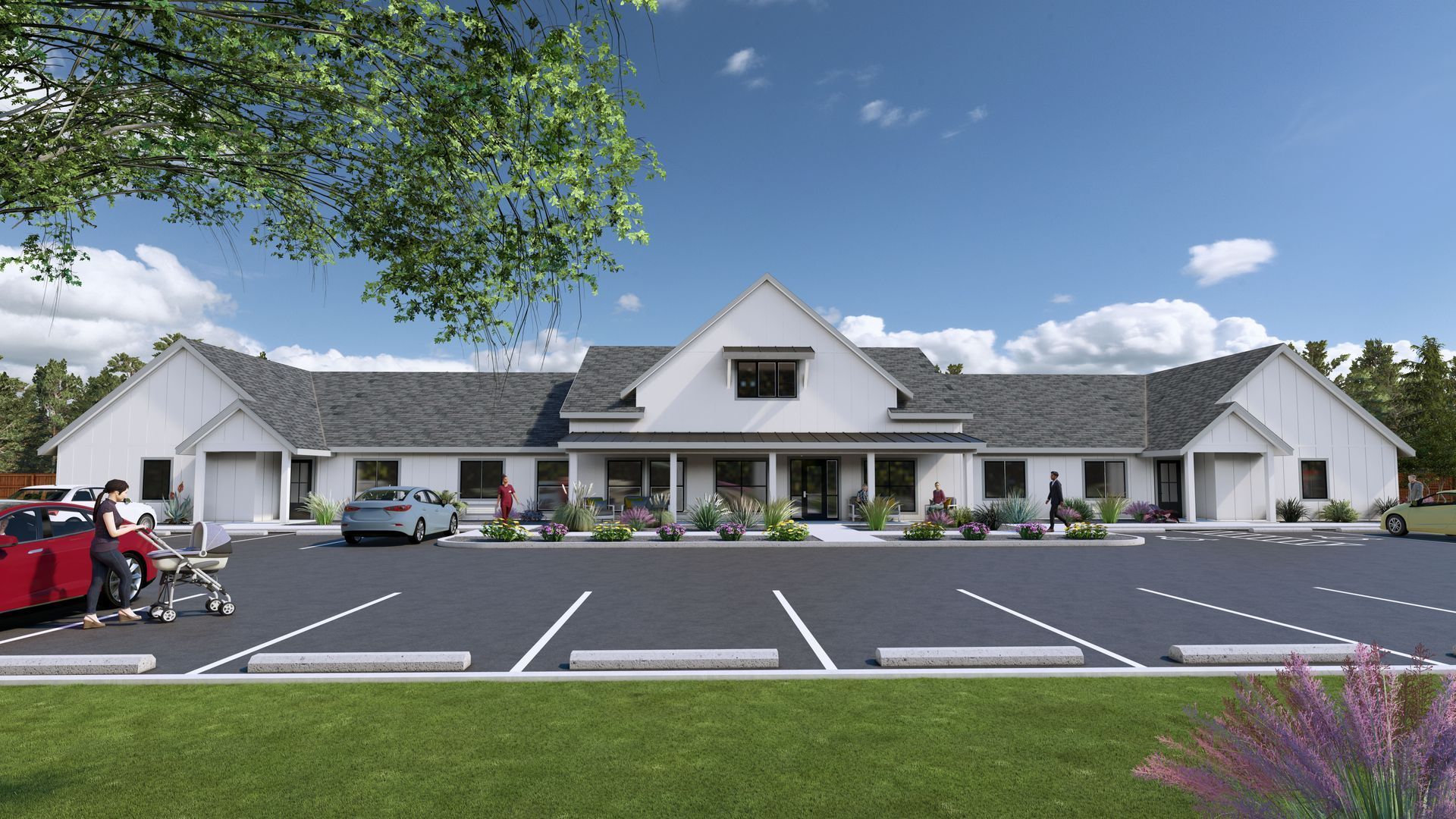
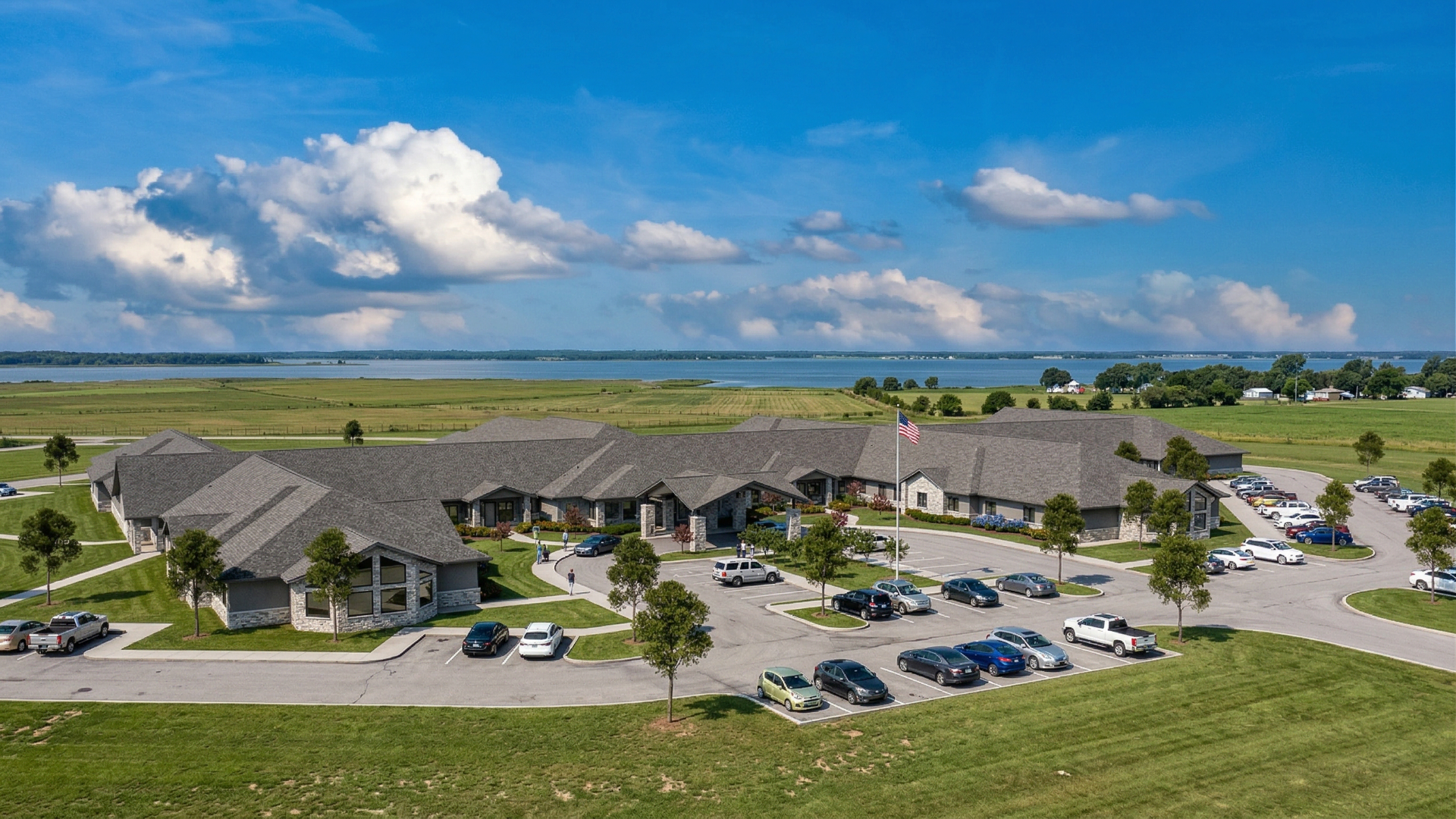
One of the communities we designed became the gathering place for the entire town.
They held their Christmas celebration there, their Thanksgiving dinner too. When the holidays came, nearly 200 people from the surrounding community would come through the doors, not just to visit residents, but because that building was where their community lived, where the elders were. So everybody went.
“These little communities, they're like big families. When you're designing for a rural senior living community, you're really designing for the whole family."
- Michael Rheinlander, Principal Architect of Rheinlander Architects
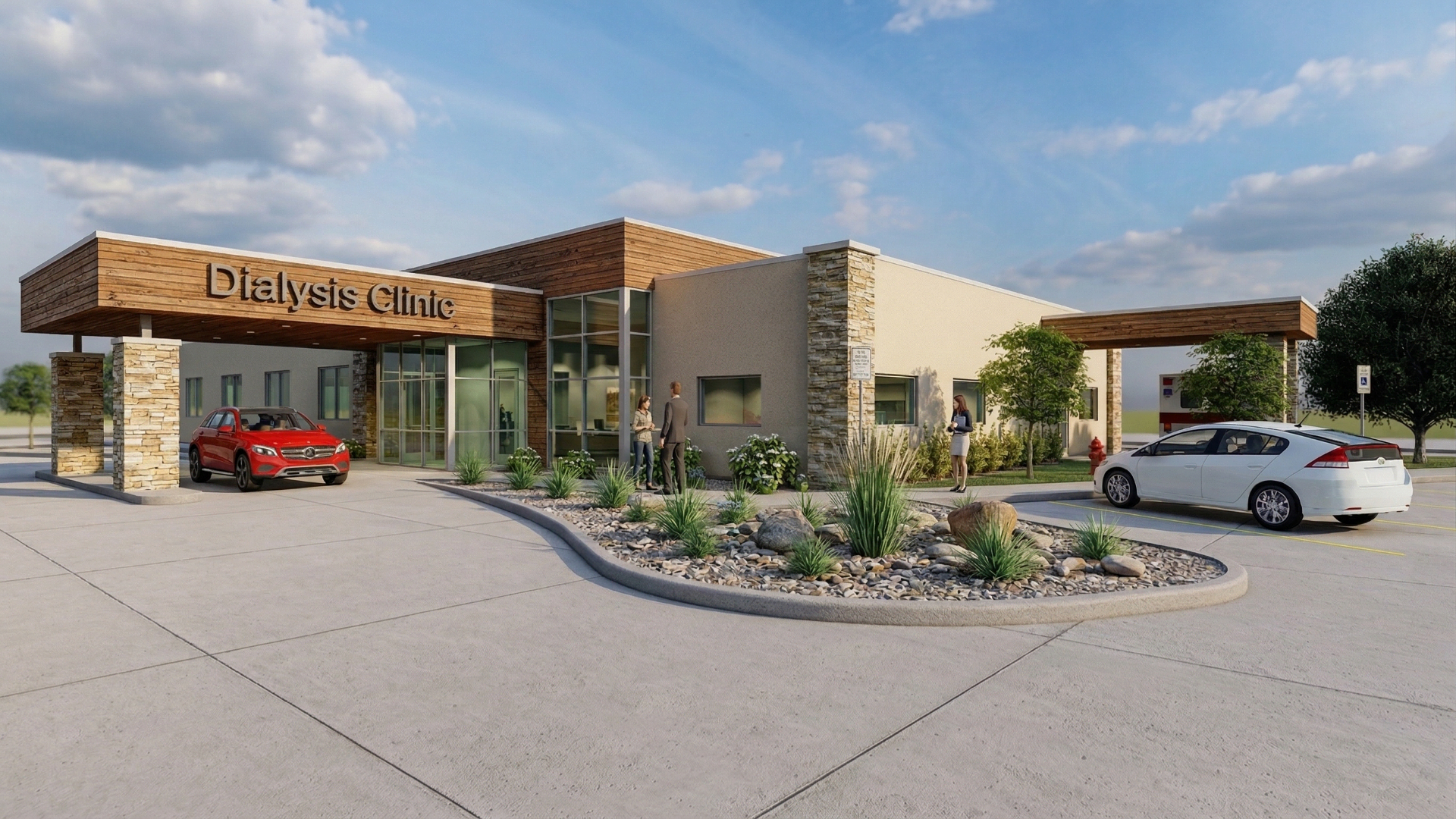
We've also designed communities that incorporated part-time doctor and dental clinics within the building, spaces where a physician would set up a couple of days each week and see both residents and people from the surrounding town. In areas where the nearest specialist might be an hour's drive away, that kind of design decision ripples outward in ways that matter.
These buildings foster a sense of community that extends far beyond their walls, becoming not just places where residents go to receive care, but the place the whole community orbits around.
Keeping Elders Close To Home: Why That Changes Everything
One of the most important things a rural senior living community does is deceptively simple: it lets people stay.
When a small town doesn't have a quality senior living option, older adults face a painful choice: stay home without adequate support, or leave their community entirely to find care somewhere else. That means leaving behind the neighbors they've known their whole lives, the landscape they grew up in, and the family members who'd have to drive an hour or two each way just to visit.
When residents are placed far from home, families visit less, social connection diminishes, and quality of life follows.
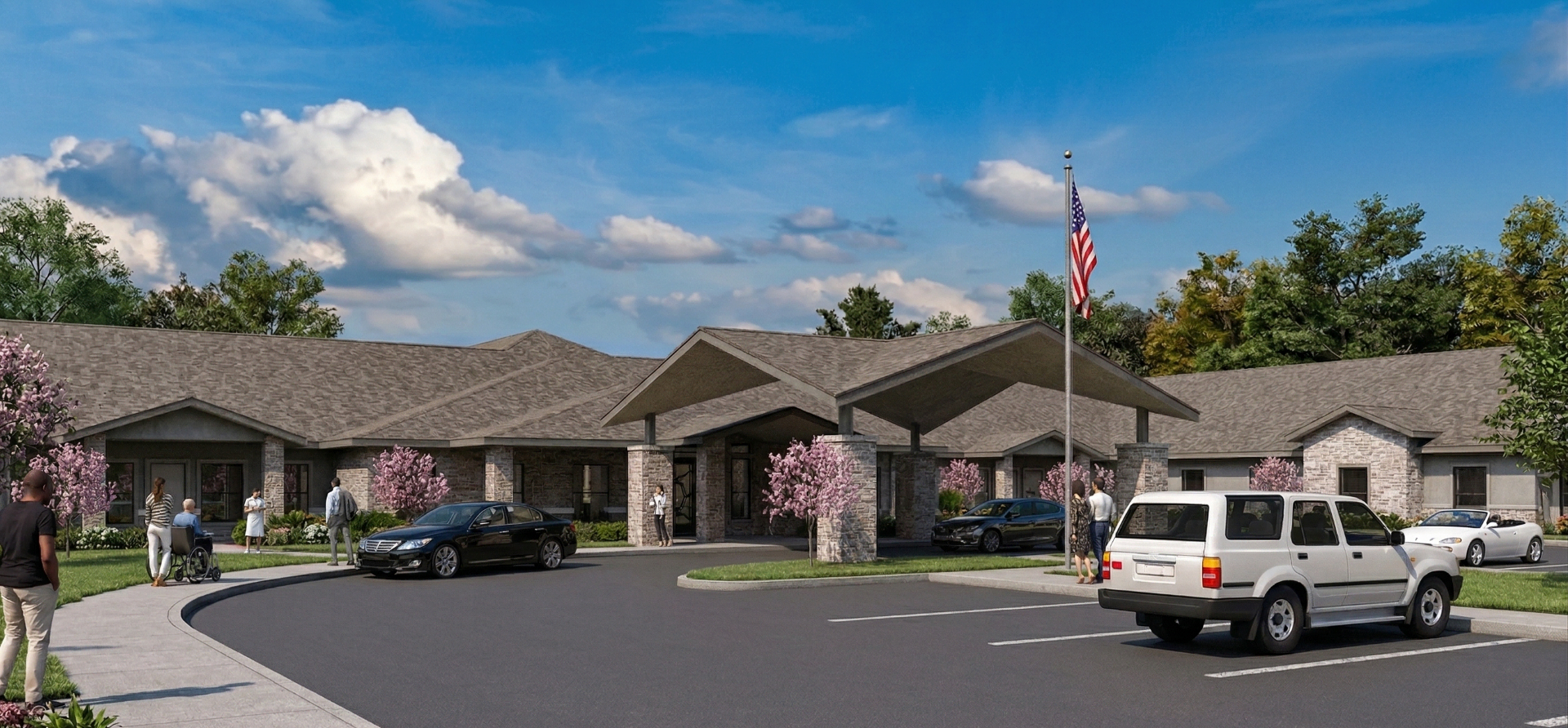
A well-designed rural community changes that math entirely. Families drive ten minutes instead of two hours, neighbors stop in, and visits become regular instead of rare. And the residents, people who may have lived in that town for 60 or 70 years, get to remain surrounded by the faces, the landscape, and the community that shaped who they are.
“It allows the people who are aging in that community to stay in their community, not be shipped off somewhere where they don't know anyone, where anyone who wants to come see them has to drive an hour or two each way."
- Michael Rheinlander, Principal Architect of Rheinlander Architects
We've seen this firsthand. In small communities, residents often know each other; they've known each other for decades. That familiarity is itself a form of care. Designing a community that preserves it is one of the most resident-centered things we can do.
An Economic Anchor in Every Sense
As the aging population grows and more older adults need care closer to home, the economic case for rural senior living becomes more significant too, and often underappreciated by communities that haven't thought through the numbers.
A senior living community of any meaningful size is one of the largest employers in a small town. Nursing, dietary, housekeeping, activities, administration, maintenance: the staffing requirements are substantial, and those jobs stay local. They don't commute in from a bigger city; they belong to the community.
That's why we often see these projects driven not by outside developers, but by local hospital districts, county boards, and community foundations. The people sitting at those decision-making tables aren't evaluating an investment opportunity in the abstract. They're thinking about their neighbors, their parents, themselves.
“The people on the board are local people, very involved in the community, very engaged. They have a personal vested interest, and they want to see the best for their community. And eventually, some of them will be there too."
- Paul Rheinlander, Principal Architect of Rheinlander Architects
There's a directness and authenticity to that kind of client engagement that we genuinely value. When Paul walks into a presentation for a rural hospital district and starts talking about cattle ranching, they relate. We're from small towns ourselves, and we understand how these communities work, how people think, and what they're really asking for when they hire an architect.
The Real Design Challenges, and How We Address Them
Rural senior living design is rewarding work, but it's also genuinely hard, in ways that are different from urban projects.
Financial Constraints Shape Every Decision
Rural senior living providers often operate primarily on Medicaid reimbursement. In many states, that rate runs meaningfully lower per day than Medicare reimbursement, and that gap alone makes clear the financial pressure these communities operate under.
Many rural senior living providers rely on county tax support, donations of land or capital, and grants to remain viable. The design has to account for this reality from day one.
For us, that means designing for operational economics. Not stripped-down or inadequate design, but purposeful, efficient design that minimizes ongoing operational costs, supports lean staffing structures, and builds in durability so that long-term maintenance doesn't become a financial burden. Every design decision we make in a rural project gets evaluated through that lens.
Infrastructure: You Can't Assume Anything
In an urban or suburban project, infrastructure access is largely a given. In rural areas, it's one of the first questions we ask, and sometimes the hardest to answer.
Finding enough land within reach of adequate water and sewer service is often a genuine constraint. When local sewer capacity isn't sufficient, we design septic systems. When local water volume can't support a fire suppression system, we design on-site water storage. When power reliability is a concern (and in rural areas, it often is), we design extended generator and fuel storage capacity: 48 to 72 hours of reserves instead of the 24 hours more commonly specified.
Design for the Trades That Exist
One of the most practical and often overlooked aspects of rural design is this: the building has to be maintainable by the people who are actually there.
A sophisticated HVAC system that requires a certified specialist to service it might be perfectly reasonable in a major city. In a rural area 90 miles from the nearest qualified technician, it becomes a liability. We actively design for the trades that are available locally, selecting systems that local technicians can diagnose, service, and repair without extraordinary effort or expense.
“We design for the trades that are available, so that when they're maintaining the building in the future, there's somebody within a reasonable distance who can actually work on it. That's honestly our biggest functional consideration."
- Michael Rheinlander, Rheinlander Architects
Construction Requires More Oversight
Getting the right contractors to rural projects is a persistent challenge. Even when we secure a qualified general contractor, subcontractors often resist traveling to rural sites, which means the companies that do show up are sometimes not the strongest performers in their trades.
That reality requires us to be more actively present during construction than we might be on an urban project: more site visits, more vigilance about whether what's being built matches what we designed. Completion timelines for rural projects can quickly balloon if construction oversight is not intensive enough early on, which is why we build that additional oversight into our scope from the beginning and stay transparent with clients about what it takes to protect their investment.
Designing for Resident Dignity and Engagement
The operational and financial realities of rural senior living shape our approach, but they don't change what we're designing for: spaces that support resident wellness, dignity, and quality of life.
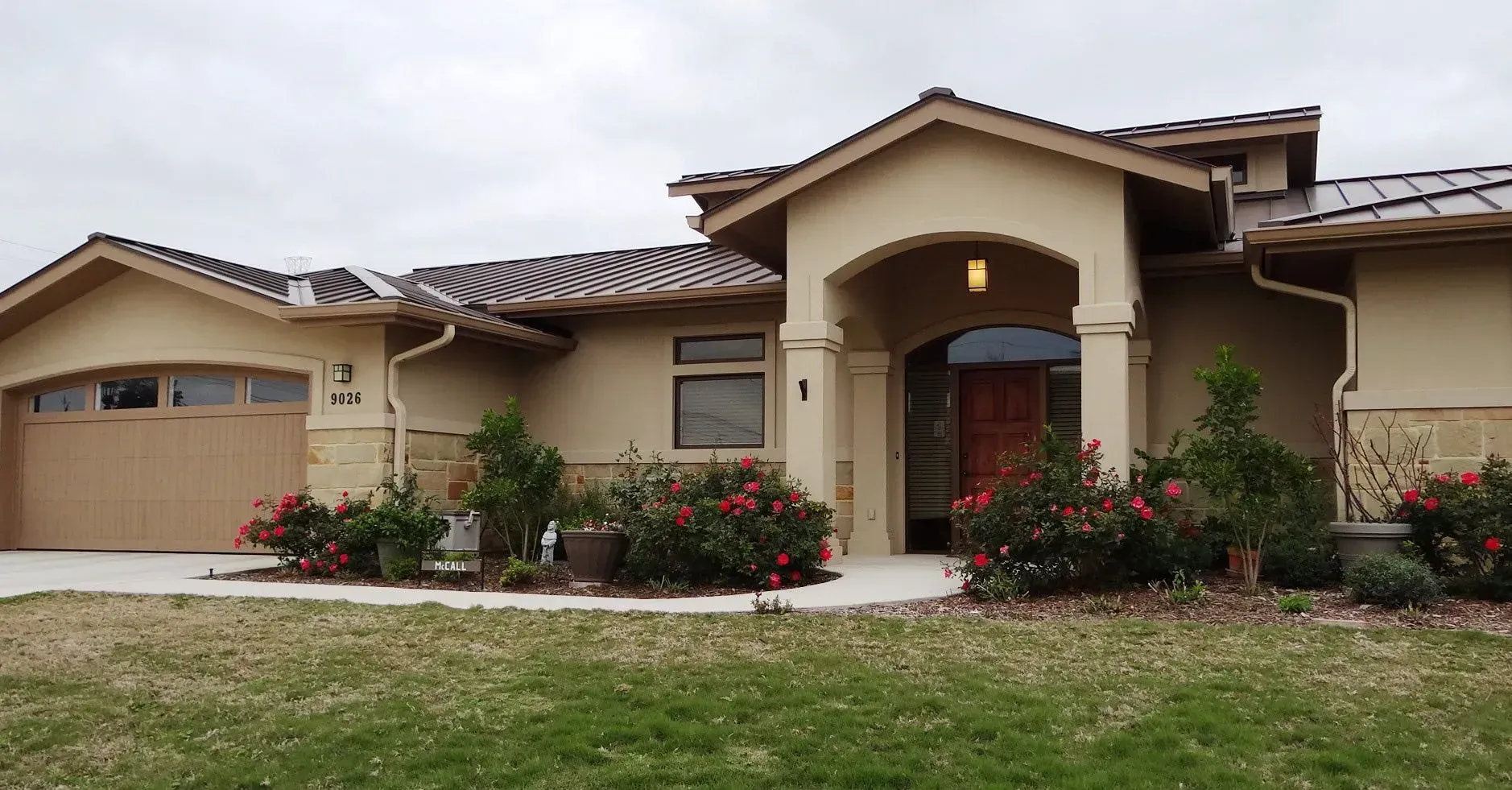
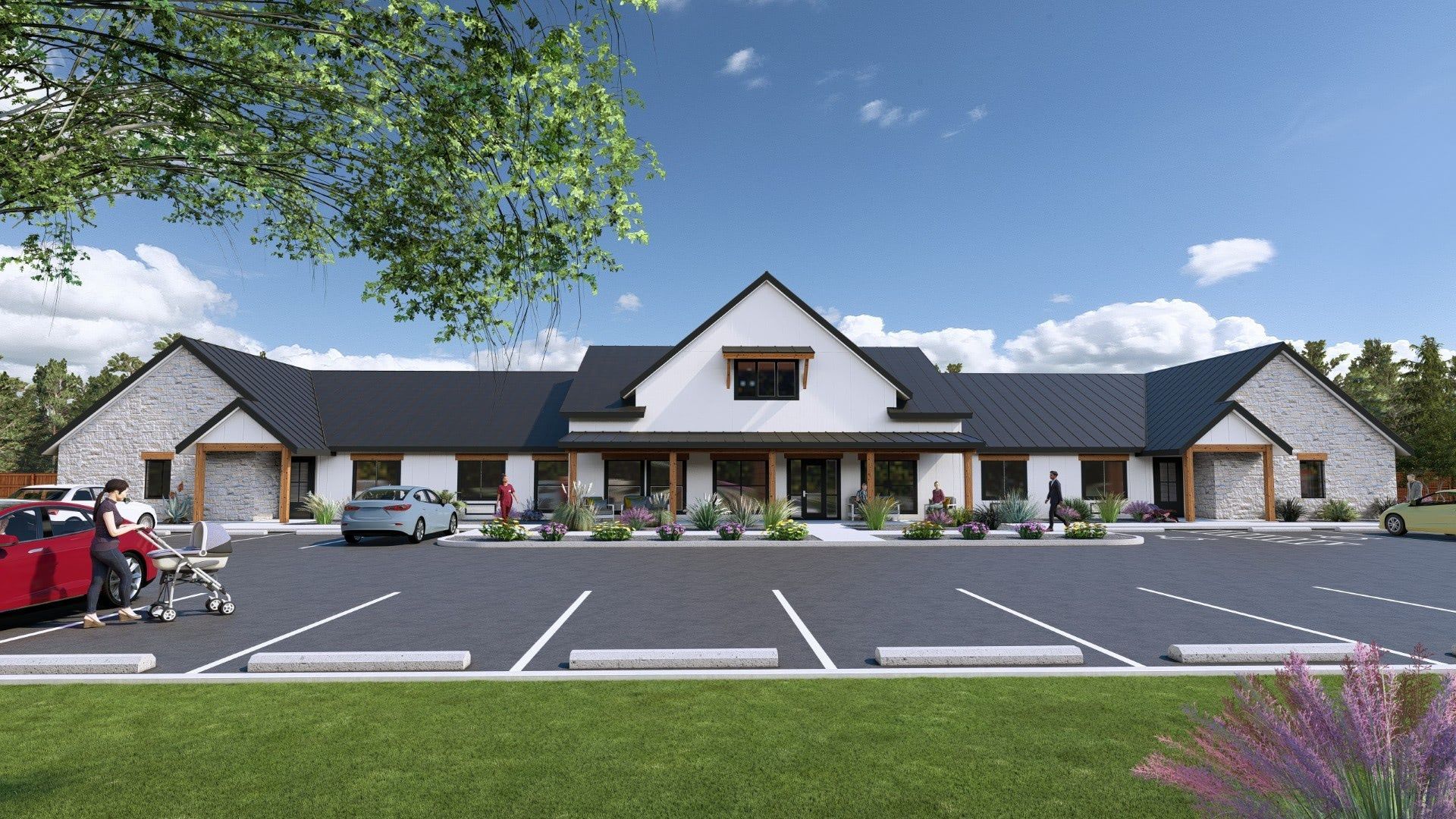
Rural senior living spaces don't have to mean institutional. If anything, we push harder against institutional aesthetics in rural projects, because the alternative, a place that feels like home that reflects the landscape and culture people have lived in, is so much more within reach when you're designing for a specific, rooted community.
In our current Dalhart, Texas project for Dallam Hartley Counties Hospital District, the interior design team has incorporated elements drawn directly from the surrounding region. Local artists are painting murals throughout the building. Materials and fabrics familiar to the area are woven into the design. Photography and artwork represent the industries and landscapes that residents have spent their lives within. The goal is that someone who has lived in that part of Texas their whole life walks in and feels connected to where they are, not displaced into something generic.
Common areas like game rooms, outdoor spaces, and dining rooms, along with shared lounge spaces, give residents things to do and reasons to interact with one another.
Where budget allows, we incorporate a wellness center or dedicated activity space, or even a community garden. Where geography allows, we've designed communities in proximity to local schools, creating opportunities for intergenerational programming (residents spending time with children) that we've seen have a profound impact on wellbeing.
Memory Care in Rural Settings
Memory care is worth addressing specifically in a rural context. Residents with dementia benefit from environments that reduce anxiety and support purposeful movement. In our memory care designs, we use circular corridor layouts that allow residents to walk continuously without encountering dead ends, essentially an endless loop that residents navigate without frustration or disorientation.
When possible, we will incorporate life skills stations for residents - these are themed, safe, and interactive areas in senior living and memory care communities that mimic familiar everyday environments to encourage positive tactile activities that reduce anxiety and foster a sense of purpose.
We pair these with memory stations, designated points along the corridor that can be triggered by wearable electronics. As a resident passes, the station can display personal photographs, familiar scenes, or imagery connected to meaningful moments in their life. A veteran might see military imagery. Someone who raised a family might see photos of their children. It's a small intervention with a significant calming effect that also eases some of the burden on care staff.
What Communities Should Know Before They Start
For anyone considering a rural senior living project, there are a few things we consistently wish clients understood earlier in the process.
This is a major undertaking on every front. Not just the design and construction, but the licensing, the financing, the operational model, the staffing strategy. The communities that make it work go in knowing that.
Shortcutting the design is a false economy. We understand the financial pressures. But the temptation to save money in design, whether by reducing square footage, eliminating amenities, or choosing systems based on upfront cost alone, almost always creates larger problems downstream. A building that can't attract or retain residents because it doesn't feel like a place people want to be defeats its own purpose.
The permitting and approval process may be simpler than you expect. Rural communities often have a significant advantage here: the decision-makers are local, they're already on board, and they have a personal stake in seeing the project succeed. We've found that the bureaucratic friction that can slow urban projects down is often greatly reduced in rural settings where everyone at the table wants the same outcome.
Involve your architect early.
As with any senior living project, the earlier we're engaged, during site evaluation, during feasibility, before you're financially committed to a property, the more we can protect your timeline and your investment.
The Work That Stays With You
We've designed senior living communities in major metropolitan areas and in towns with fewer than 2,000 residents. Both have value, and both matter.
But there's something particular about rural work that has stayed with us over the years. These are communities that often have fewer resources and face more headwinds, and yet they're choosing to invest in their most vulnerable members anyway.
The community leaders on the boards and hospital districts who drive these projects aren't doing it for a return on investment. They're doing it because quality senior care in a rural community is both a moral commitment and a practical one. They're doing it because they know the people who will live there and they understand the long term benefits of choosing to invest in the future of their community.
That kind of client makes you care more about getting it right.
If your community is considering a senior living project, whether you're at the earliest stages of feasibility or deeper into the planning process, we'd welcome a conversation about what's possible and what it takes to do it right.
Frequently Asked Questions
Why are rural senior living communities often funded differently than urban ones?
Rural senior living providers typically rely much more heavily on Medicaid reimbursement. Because rural populations tend to utilize Medicare rehabilitation benefits less frequently, many rural providers operate near breakeven or at a loss without supplemental support from county tax districts, donations, or grants. This financial reality shapes everything from building size to design priorities.
What makes designing a rural senior living community different from an urban project?
Rural and urban senior living projects diverge across nearly every dimension: infrastructure access, contractor availability, financial constraints, operational considerations, and community role. Rural senior living communities often serve as genuine community hubs, hosting town-wide events and providing services to the broader community, not just residents. They're also designed with long-term local maintenance in mind, which influences everything from mechanical system selection to material choices.
How do construction challenges in rural areas affect the project timeline?
Attracting qualified contractors and subcontractors to rural sites can be difficult, and projects that don't have adequate construction oversight often see work that doesn't meet specifications, which creates expensive problems when it comes time for inspections and licensure. Rural projects may also run behind the schedules that urban projects achieve, and we build more intensive construction administration into our rural project scopes as a result.
What does "designing for the available trades" mean?
It means selecting building systems (HVAC, plumbing, electrical) that local technicians can actually service without specialized training or long-distance service calls. In a rural area, a sophisticated system that requires a factory-certified technician might sit broken for weeks while a qualified repair person is located. We design to prevent that scenario from the start.